Private jet charter rates Los Angeles to San Francisco
Private jet charter rates Los Angeles to San Francisco start near $3,000 one way. This 279 nautical mile route takes about an hour in a light jet. Below are estimates by class, the fees added on top, and how to time the booking.
- 279 nm321 sm
- 1h 17mturboprop duration
- $3,000–$4,500one-way ballpark
- Main page
- Route list
- Los Angeles to San Francisco
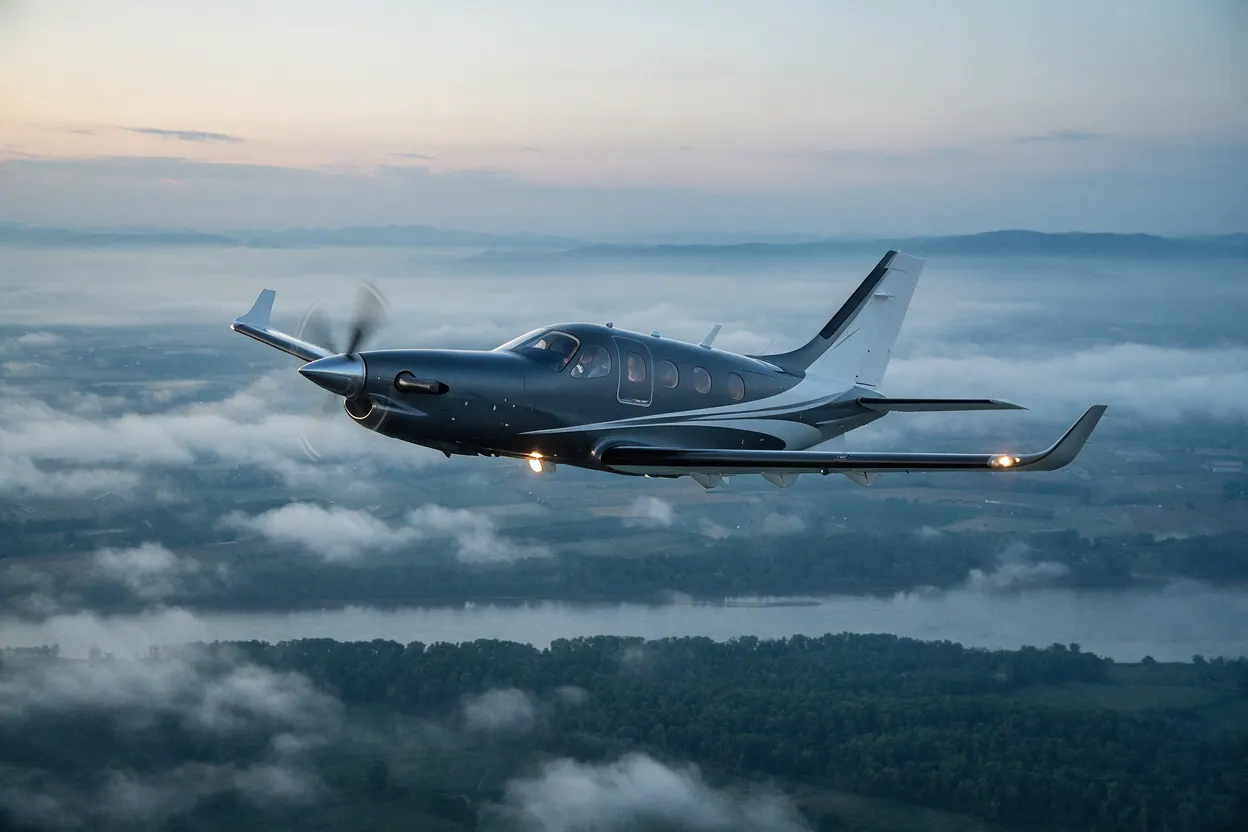
Los Angeles to San Francisco pricing by aircraft type
From Los Angeles to San Francisco by private jet is 279 nautical miles, 1h 17m on a turboprop, estimated at $3,000–$4,500 one way.One-way estimates for the Los Angeles to San Francisco route, based on 279 nautical miles and the block times below. These are estimates from a broker, not quotes from an operator. Expect the final number to move with the aircraft, the FBO fees and the hour you fly.
| Class | Duration | One-way est. | Remarks |
|---|---|---|---|
| Turboprop | 1h 17m | $3,000–$4,500 | Strongest option |
| Light jet | 0h 59m | $4,000–$6,000 | Nonstop |
| Midsize jet | 0h 58m | $5,200–$8,000 | Nonstop |
| Super-midsize jet | 0h 55m | $7,200–$10,000 | Nonstop |
| Heavy jet | 0h 55m | $9,500–$14,500 | Nonstop |
Per-aircraft estimates, not per-seat, quoted before federal excise tax and segment fees. Time covers taxi, climb and descent.
Airline tickets vs a charter, Los Angeles to San Francisco
Airline prices are the lowest Google Flights showed for one traveller on Dec 9, 2026 (checked Nov 15, 2026); the charter row is our estimate for the whole aircraft. For 8 travellers, first-class airfare tickets total about $1,232, versus $3,000–$4,500 for the entire turboprop.
| How you fly | Carrier | Dur | One-way est. | Each seat |
|---|---|---|---|---|
| Airline economy | Frontier · nonstop | 1h 28m | $19 | $19 |
| First-class airfare | American · nonstop | 1h 35m | $154 | $154 |
| Turboprop | The full aircraft, 8 seats max | 1h 17m | $3,000–$4,500 | $380–$560 |
Airline ticket prices shift daily and don't cover bags past the fare allowance; the per-seat charter number assumes all seats are taken.
Why turboprop suits this route
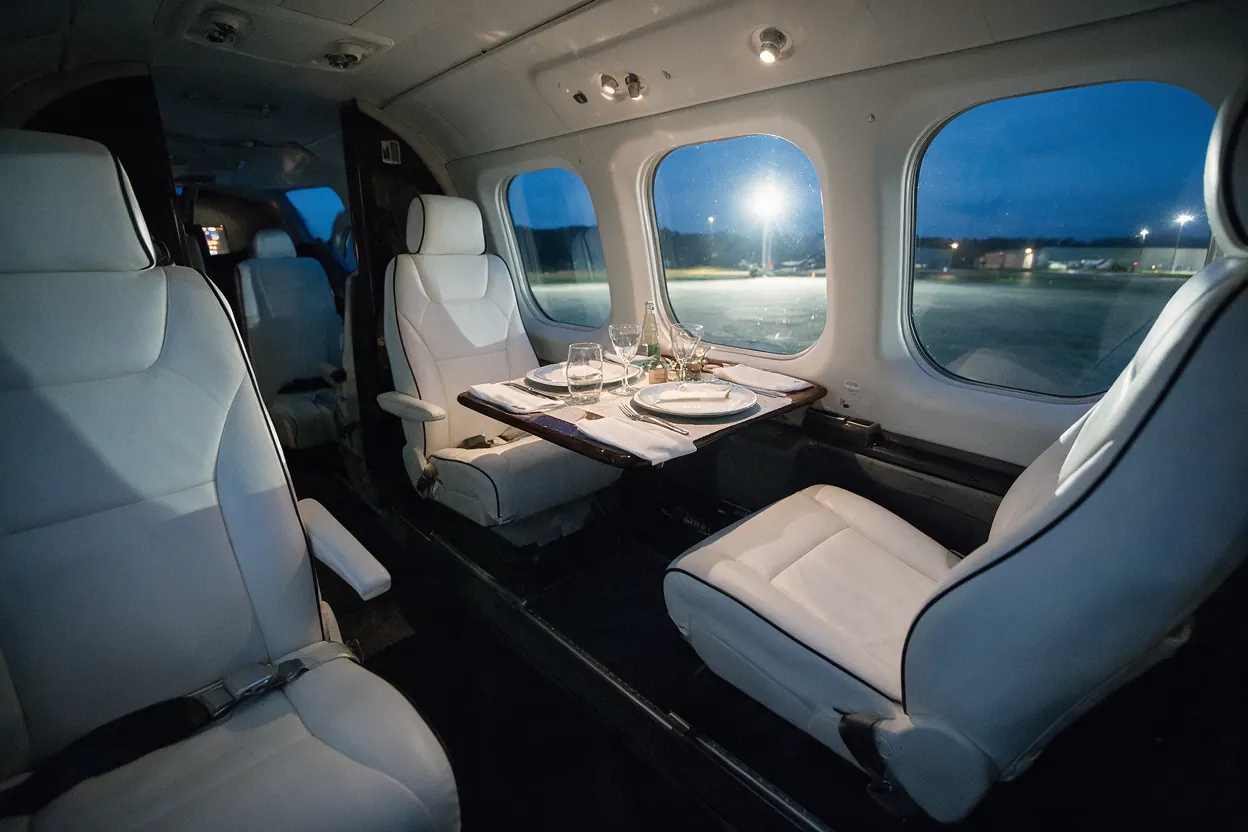
The Pilatus PC-12 NGX and Daher TBM 960 both cover the route nonstop with room for luggage. At this length the flight time gap between classes is minutes, so you are paying for cabin instead of speed.
A light jet is the step up when you want a faster cruise and a quieter cabin. Midsize and super-midsize aircraft make more sense when the cabin matters more than the cost, and a heavy jet costs roughly double the turboprop for the same short flight.
Pilatus PC-12 NGX
- 6 pax
- 290 kt cruise
- 1,800 nm range
Cabin 4 ft 10 in tall, 16 ft 11 in long. Baggage 40 cu ft.
Daher TBM 960
- 6 pax
- 330 kt cruise
- 1,730 nm range
Cabin 4 ft tall, 13 ft 3 in long. Baggage 32 cu ft.
Departing Los Angeles
Van Nuys is the busiest of the three departure airports for this kind of hop and its 8,001 ft runway handles every class on the list. LAX gives you the longest runway at 12,894 ft and the deepest aircraft choice if you are connecting from a commercial flight. Choosing Van Nuys over LAX can cut a full hour from the front end of the trip.
Plan on arriving at the FBO with the whole group together so the crew can load bags once and push off the schedule.
Arriving in San Francisco
SFO gives you the longest runway on the far end at 11,870 ft, while Oakland is often the faster drive into the Financial District and the East Bay. Which one you use changes the ground time more than the flight itself. For meetings near Market Street, Oakland frequently beats SFO on curb-to-desk time.
Fog is the recurring story here between May and September, and SFO runs on a reduced arrival rate when the marine layer sits low. If you are booked into SFO on a summer morning, then watch the forecast and let the trip desk know you can switch to Oakland. The flight itself is short; waiting on the ground is what eats the afternoon.
| Field | ID | Rwy |
|---|---|---|
| San Francisco International Airport | KSFO / SFO | 11,870 ft |
| Oakland San Francisco Bay Airport | KOAK / OAK | 10,520 ft |
| Van Nuys Airport | KVNY / VNY | 8,001 ft |
| Hollywood Burbank/Bob Hope Airport | KBUR / BUR | 6,886 ft |
| Los Angeles International Airport | KLAX / LAX | 12,894 ft |
When demand and prices peak
Weekday mornings and Sunday afternoons are the tight windows on this route, driven by business travel and weekend returns from the Bay Area. Rates climb when aircraft reposition empty, so a one-way at the wrong hour costs more than a round trip booked together. Booking the return leg alongside the outbound usually beats pricing each flight on its own.
If you need to fly during a major Bay Area event, then lock the aircraft earlier than usual because the local fleet is small and fills fast. Midweek midday departures are the softest window, and that is where the lowest estimates on the class table show up. A same-day return by air is realistic here, but the aircraft waits at the far end, so you pay for the wait as part of the day rate.
Routes near Los Angeles to San Francisco
These 6 private jet city pairs span 161 to 321 nautical miles, with one-way turboprop estimates running $2,200 to $5,000.
Questions about this route
What are private jet charter rates from Los Angeles to San Francisco?
Estimates run from about $3,000 to $4,500 for a turboprop one way, and $4,000 to $6,000 for a light jet. Midsize runs $5,200 to $8,000, super-midsize $7,200 to $10,000 and heavy $9,500 to $14,500. These are broker estimates for 279 nautical miles, and the final figure depends on the exact aircraft and the fees at each end.
How long is the flight?
A turboprop takes about 1 hour 17 minutes and a light jet about 59 minutes. Midsize aircraft come in around 58 minutes, and super-midsize and heavy aircraft around 55 minutes at cruise. Door to door from a Los Angeles FBO to a San Francisco hotel is usually shorter than the commercial airport routine on the same morning.
Can I do a same-day return?
Yes. The aircraft waits in San Francisco while you work, so a same-day return is billed as a day rate rather than two separate one-way prices. Ask for both numbers and compare them. On this distance the day rate is often the better value when your meeting runs past midday.
Which airports do you use on each end?
From Los Angeles you can depart Van Nuys, Burbank or LAX. On the far end, SFO and Oakland both take this class of aircraft, and Oakland is often the quicker drive into downtown. Tell the trip desk your hotel address and the airport choice follows from the traffic.
What changes the price on this route?
Aircraft class, the hour you fly, and empty repositioning are the three levers. A one-way at a peak weekday morning can price above a round trip booked together. FBO and landing fees are added to the hourly rate, so the airport pair you pick shows up in the total.
Do I need to bring identification?
Bring a government-issued photo ID for each passenger, the same as any commercial flight. There is no TSA screening at the FBO, but the crew checks the manifest before departure. On this domestic route there is no customs step at either end.